
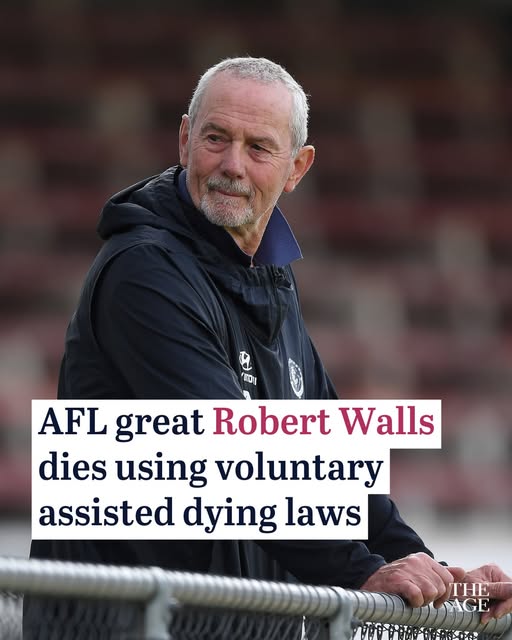
Robert Walls Death and Obituary – Robert Walls, one of the most revered and influential figures in Australian Rules Football, passed away peacefully on Thursday at the age of 74. Walls died in his East Melbourne apartment under medical supervision, surrounded by his sister Annette and three children. His death marks the end of a remarkable era in AFL history, where he served as a celebrated player, coach, and later, a respected media commentator.
Walls’ passing came after a courageous and deeply personal decision. Several weeks prior to his death, he made the momentous choice to utilize Victoria’s voluntary assisted dying laws. Diagnosed with terminal cancer and facing only months to live, Walls opted to take control of his final chapter, seeking to avoid prolonged suffering. His decision, both brave and contemplative, reflected the dignity and integrity that characterized much of his public and personal life.
Born in 1950, Robert Walls carved a storied legacy in football. His playing career began with the Carlton Football Club, where he made his debut in 1967. He would go on to play over 200 games for the Blues, earning acclaim for his toughness, tactical intelligence, and leadership on the field. A premiership player and club stalwart, Walls transitioned seamlessly into coaching following his retirement in 1978.
As a coach, he further cemented his place in the game’s history. He led Fitzroy, Carlton, Brisbane, and Richmond through various rebuilding phases, most notably guiding Carlton to a premiership in 1987. Walls was known for his strategic mind, firm discipline, and passionate commitment to team development. Over his coaching career, he was lauded for shaping young talent and fostering competitive teams, leaving a lasting imprint on multiple clubs.
Following his coaching career, Walls became a respected voice in football media. His insightful commentary and analysis for television and print outlets earned him a loyal following among fans and fellow analysts. He brought to his media work the same honesty and depth of understanding that defined his time on the field and on the sidelines.
Walls’ decision to end his life through assisted dying laws has sparked conversation about personal choice, dignity, and the rights of the terminally ill. In doing so, he not only made a powerful personal statement but also contributed to a broader societal dialogue on end-of-life care. Those close to him have spoken of his clarity, bravery, and peace with his decision.
Tributes have poured in from across the football community and beyond, with AFL clubs, former players, and media colleagues expressing admiration and sorrow. Many have remembered him as a fierce competitor, a thoughtful mentor, and a deeply principled man.
Robert Walls’ death is a significant moment in Australian sport. His contributions as a player, coach, and commentator spanned over five decades, influencing generations of footballers and fans. He leaves behind not only a rich legacy in the game but also a story of courage and compassion in the face of mortality.